By the end of this post, you’ll know:
How to spy on your competition (ethically)
How to find a gap in your market you can fill
How to land more clients using what you find

Taylor Swift didn’t get famous by accident!
She used one of my favorite forms of customer research to reveal and tap into a massive gap in the market.
In this post, you’ll discover how you can use the same research method as Taylor (and many other successful businesses) to land more clients.
First, let’s go back in time to kick off a deep dive into one of my favorite forms of customer research, the competitive analysis.
We’ll get to Taylor in a minute!

Forward &
save this post!
If you have a business friend who could benefit from better positioning, forward this post to them!
And don’t forget to bookmark this post or save it somewhere so you can refer back to it!
How one man’s frustration with jeans opened the floodgates of an untapped market
Picture this:
The year is 1968. The location is San Francisco, home to peace-loving hippies spearheading the counterculture revolution.
The uniform?
Tie dye t-shirts and jeans, of course.
Specifically, Levi's jeans.
(Because this is San Francisco, after all, and the gold rush miners may be long gone but the blue denim Levi's they popularized live on.)
You are one of the said hippies of your generation. However, unlike everyone else...
you're not wearing Levi's.
Because you're 6 feet tall and can't find a dang pair that fits, no matter how many Levi stores you visit.
So you decide to take matters into your own hands. The next year, you and your wife raise $63,000 to open your own store, where you become a one-stop-shop for jeans of all sizes.
It's super successful.

Gap HQ in San Francisco today!
And because you're of a generation that radically broke away from the ideas of previous generations to champion civil rights, women's rights, and anti-war protests--
basically, a generation unlike any before--
you choose a name for your store that reflects that.
Drawing on the term "generation gap," you name your super successful store...
the Gap.
***
Thanks for indulging in a bit of time travel with me, friend.
Gap's origin story is one of my favorites because it demonstrates how much potential there is in finding--and filling--the gaps in your market.
(Side note: Do I totally wish Gap's name referred to the gap in the market they filled? Yes, yes, I totally do! 😂)
Anyway--
as promised, this story brings me to the power of one of my favorite forms of research, the competitive analysis.
The Competitive Analysis (AKA your chance to snoop on your friends 👀)
If you know the problem you solve for your ideal clients, the purpose of a comp analysis is to check out other businesses that solve the same problem so that you can get an idea of what your field looks like and where you fall in it.
You might be wondering, “But, Mimi, what exactly IS a competitor analysis? What does it look like?”
Practically, a comp analysis is just a spreadsheet—I share screenshots of mine below. (Note that you do not need to fill out all these categories for a comp analysis to be insightful. So don't get overwhelmed.)
The purpose of a comp analysis: Separating feelings from fact so you make smarter decisions
Even if you filled out the categories in the first screenshot below of my comp analysis categories, you're getting ahead of the crowd.
Because writing down basic info about the other people in your field to refer to for decisions is the difference between fact-based decisions and impression-based decisions.
(Secretly, my heart sinks every time I hear a statement along the lines of "I feel like there aren't any services that do X, it's a unique service that I want to make exist." Feelings are valid but they don't always make for profitable business decisions.)
What categories should go in your competitor analysis?
Without further ado, here are a selection of categories I scope out when I'm comp-ing and a quick description of each one.
Feel free to swipe any of this for your own comp analysis. :)


If you want these questions in a list you can copy and paste, here you go:
Business name
Business website
What makes them different? What is their unique advantage?
How is that difference communicated?
Features and benefits of offer 1
Features and benefits of offer 2
Features and benefits of offer 3
What is their look?
How do they talk to their ideal reader?
What kinds of content do they put out, where is it, anything of note?
What do they do well?
What don’t they do well?
What’s their social media strategy?
There are a lot of uses for doing a comp analysis, but my favorite is that it's the easiest way to see what the gaps in your market are.
Spotting these gaps and then creating an offer that fills them is how some successful businesses have gotten their start.
Let's take a look at some examples!
5 businesses that found success by filling a gap in the market
Here are examples of five businesses in different sectors that were started after founders spotted gaps in the market and sought to fill them.
1) In the media: Asian Boss Girl

Asian Boss Girl, billed as "media for the modern Asian-American woman," started as a podcast in 2019 after the founders noticed that Asian women in the media were largely in the fashion and beauty space. What was missing? Representation of Asian women in the corporate world.
Thus kicked off podcast discussions between Janet, Helen, and Mel about life as working Asian American women in LA--discussions that since branched into a full-blown business.
2) In retail and e-commerce: Merit Beauty
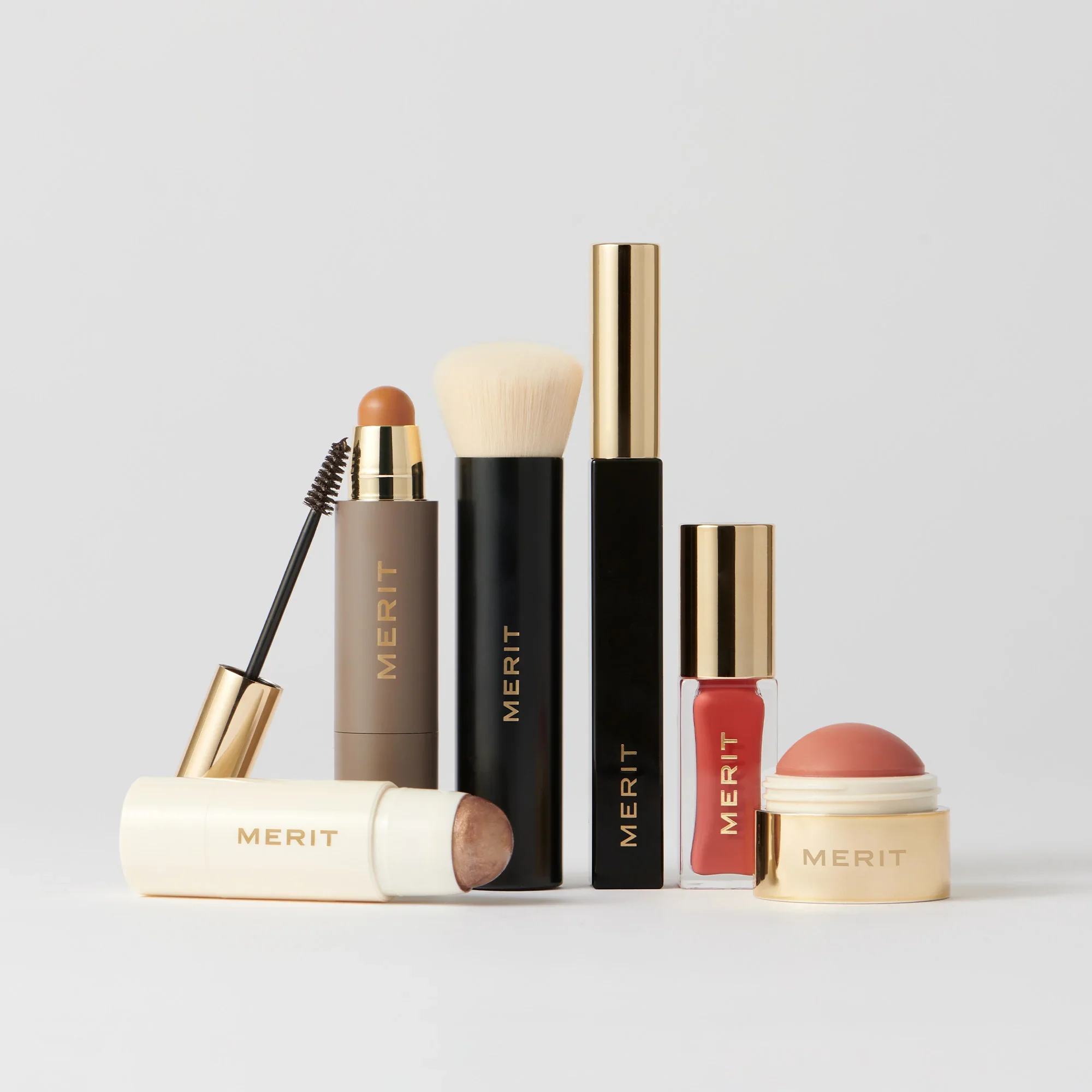
When Merit Beauty's founder Katherine Power posted a 5-minute work makeup routine that went viral for its simplicity, she realized there was something to be desired in the beauty market among professional women--specifically, easy makeup that anyone could slap on and look good in.
As reported by Forbes, "Power identified a void in the market for a brand like MERIT: 'I felt there was this white space for a luxury beauty brand that was clean and well-edited, and that really brought out someone's natural beauty, giving them enough coverage when they need it. And that also provided a beautiful brand experience.'"
3) In online courses: Master of About Pages
My kickass business mentor, Betsy Muse of Rocket Fuel Strategy, noticed in online groups there were a lot of people asking how to write an about page. So she started talking about how to write an about page (see blog post here from RockeFuelStrategy.com)...
and has since filled a gap in the copywriting market with her Master of About Pages course for Copyhackers.
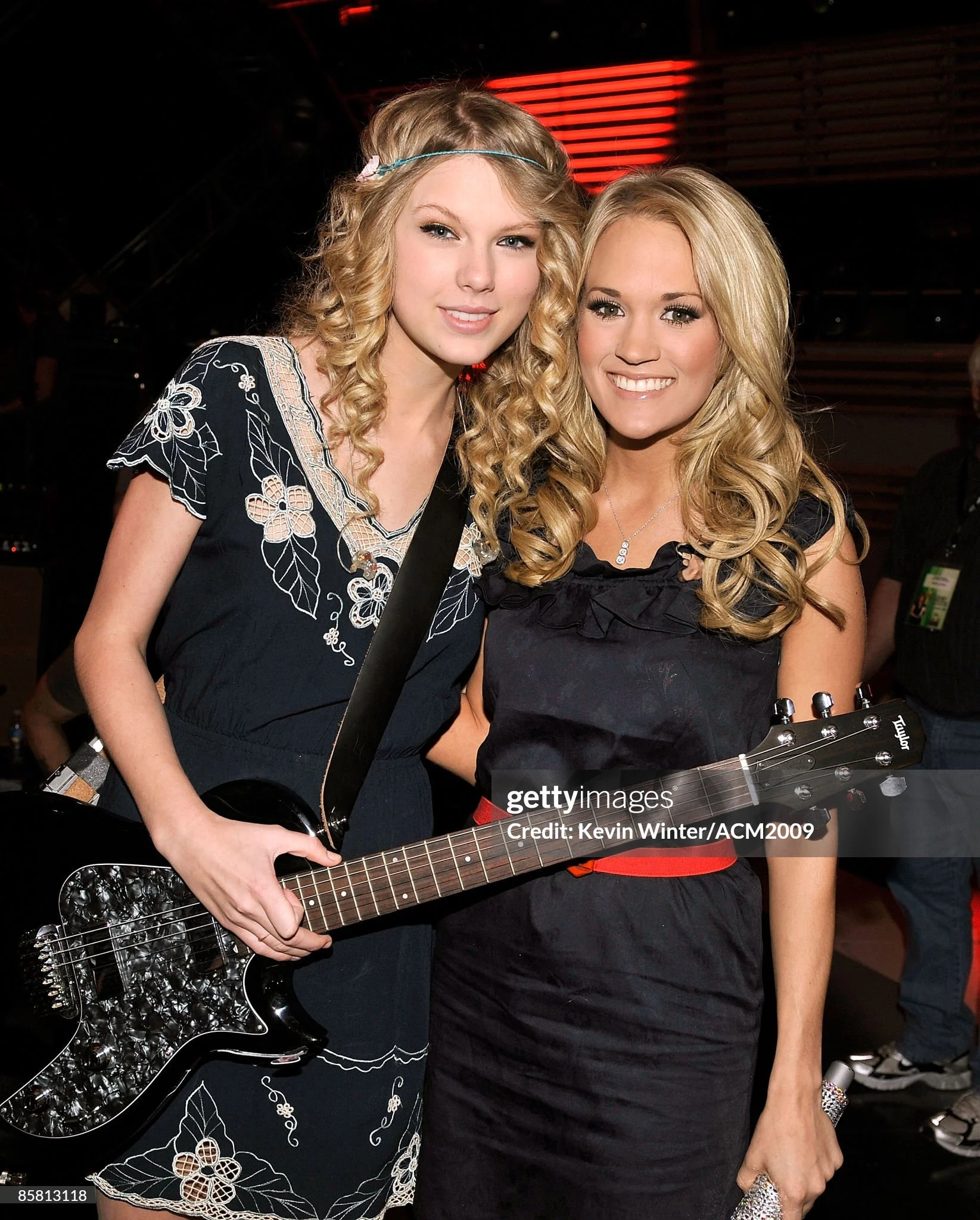
4) In entertainment: Taylor Swift & Carrie Underwood in 2005
We all know now that Taylor Swift's success is a result of her and her family's business acumen.
What I don't think we talk about enough is her early success.
Before the Eras tour, before the re-recordings, even before Fearless came out in 2008, the Country Music Association commissioned a marketplace study that "identified one of the largest focuses of growth potential as 'pop country' listeners, whom it described as 'very urban, responding to new, female, pop-leaning country artists.'"
In other words, there was a gap in the market for pop-y country music for 18 to 29-year-olds that became filled by Taylor and Carrie Underwood.
5) In marketing services: My Smarter Customer Research newsletter
Allow me to toot my own horn here for a sec. :)
I started my newsletter, Smarter Customer Research, when I noticed that so many business coaches and marketers tell you to "Talk to customers!" with absolutely no follow-up on how to do that, and how to translate that info into profitable assets.
As a firm believer that business decisions--which include copy and marketing decisions--should be research-based, I'm here to show you what it means to do customer research and how to make it useful.
You can sign up for Smarter Customer Research here to see how customer research is your only reliable path to more profits!
Your takeaway: Do this when you’re unsure which direction to move in
Next time you're at a loss on how to move your business forward, open up a new Google sheet and take 30 minutes to fill out these columns in your comp analysis:

Snoop on your colleagues in the name of seeing what's missing in your market...
and see how new ideas for positioning, marketing, and offer creation come to you. 👀
xoxo,
Gossip Girl
(...No, just kidding, I'm still me.)*
Until next time,
Mimi
*Forgive me, I couldn't resist the reference. 😂 If you don't know, Gossip Girl was a show in the late 2000's about an anonymously-run website that snooped on NYC high schoolers' lives and published all their secrets.
Not saying your comp analysis should do the same thing, except for the snooping part.
My Messaging Playbook is the easiest way for chronic overthinkers to stop overthinking about what to say to attract those right-fit clients. Because it gives you the exact messages they need to hear from you to move towards saying YES! to you and your offer.
Across ten pages, I dive into who your client is, which pains are most pressing to them, what their desires are (including ones they don't state explicitly), and why they need YOU to solve their problems for them.
See the messaging playbook here: mimizhou.com/messaging
Want to work with me?

Hi, I’m Mimi!
I’m a conversion copywriter for coaches and course creators. I give you the words to connect with your audience without the guesswork of what they need to hear to become clients.
Here are a few ways we can work together:
💥 The Small Start, Big Win™ Copy Polish, where I optimize your webpages for sales
💥 The Quick Clicks Email Polish, where I optimize your emails for opens and engagements
💥 The Messaging Playbook, where I hone in on messaging that attracts the right clients
Questions? Want to chat?